

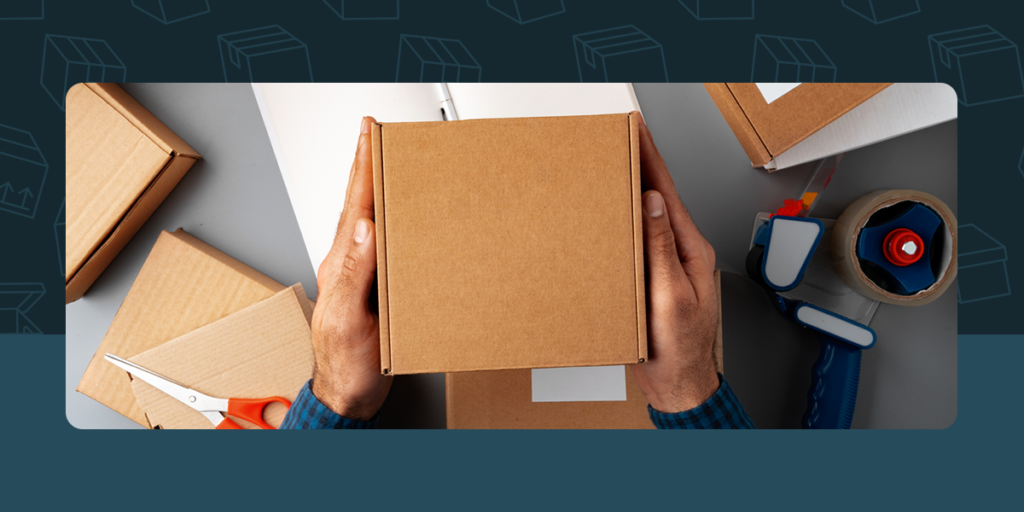
Here’s what e-commerce businesses should consider before deciding between a mailer box and a shipping box:
Every e-commerce order ships in a box, but few sellers stop to ask whether it’s the right one. An oversized shipping box inflates dimensional weight charges. A mailer used for a product that needs more structural backup risks damaged shipments, refunds and a weaker brand impression. Consider your product’s first impression and protection when deciding whether you should use a mailer box or a shipping box for e-commerce.
Most sellers have seen a C-Series mailer and a standard shipping carton side by side, yet few have compared them against their own product lineup. One path leans on presentation and speed at the packing bench, while the other leans on protection, capacity and cost efficiency at volume. Defaulting to whichever box sits on the shelf, rather than choosing by design, means absorbing costs a quick comparison could prevent.
This guide breaks down the difference between mailer box and shipping box options across protection, branding, packing and total shipping cost, then maps use cases to each so a seller can match format to product with confidence.
A mailer box and a shipping box are both corrugated, but they’re engineered for different jobs. Understanding how each one is built clarifies which is the right fit. A C-Series mailer box looks and feels different from a standard shipping carton the moment it’s opened. It brings a few defining characteristics to the table:
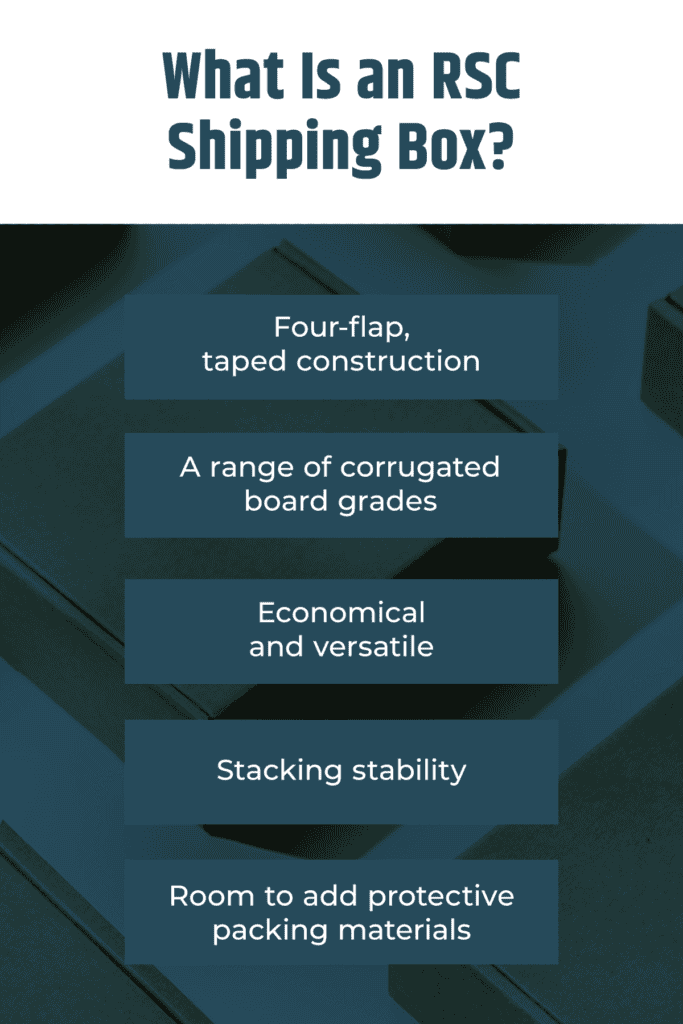
An RSC, or regular slotted container, has a no-frills design that has made it the default choice for commercial shipping, built around a few core traits:
Several factors determine which format fits a given product and brand. Sellers weighing a mailer box vs. a shipping box for e-commerce should evaluate each option against their products, brand goals and order volume.
Protection has to come first, since a heavy, fragile or irregularly shaped item needs structural support regardless of how much a brand values presentation.
Mailer boxes often rely on single-wall corrugated construction, which works well for lighter, compact products that don’t require additional padding. The structure holds its shape without extra reinforcement, as long as the product inside doesn’t need room to shift or settle.
An RSC shipping box instead offers access to heavier board grades for added rigidity, plus interior space for void fill and other packing materials when a product needs that extra layer of cushioning, something the mailer’s book-style design largely bypasses.
Mailer boxes hold a clear advantage in branding, presentation and printing. Both the interior and exterior accept high-resolution printing, making the format a natural fit for DTC brands that treat the unboxing experience as part of the customer relationship. Custom prints, logos and full branding can extend across every panel a customer sees when the lid comes off, turning a simple delivery into a moment that reinforces brand identity.
RSC boxes can still carry strong exterior branding, since flexo printing performs well on the format, but they offer less overall design real estate than a mailer. Digital, litho and the same flexo process are all available across both formats, so neither option locks a brand out of customization.
Material choice also plays into brand perception. Paper-based packaging formats are more strongly associated with perceived eco-friendliness and environmental responsibility. That gives corrugated options an edge with sustainability-minded customers regardless of which format a brand chooses.
Once product needs and branding goals are settled, daily operations determine which format best fits the workflow. Mailers assemble quickly at the packing bench. Their self-locking design requires no tape, and the format flat-packs efficiently for storage in the warehouse between orders. For a fulfillment team running through hundreds or thousands of shipments, that speed adds up fast.
Sealing an RSC takes a bit longer, since tape is required on both the top and bottom flaps. In exchange, the format offers greater flexibility for different void-fill configurations and accommodates a wider range of product shapes and sizes. For an operations lead weighing assembly time against product variety, even small per-box differences compound significantly across a high-volume operation.
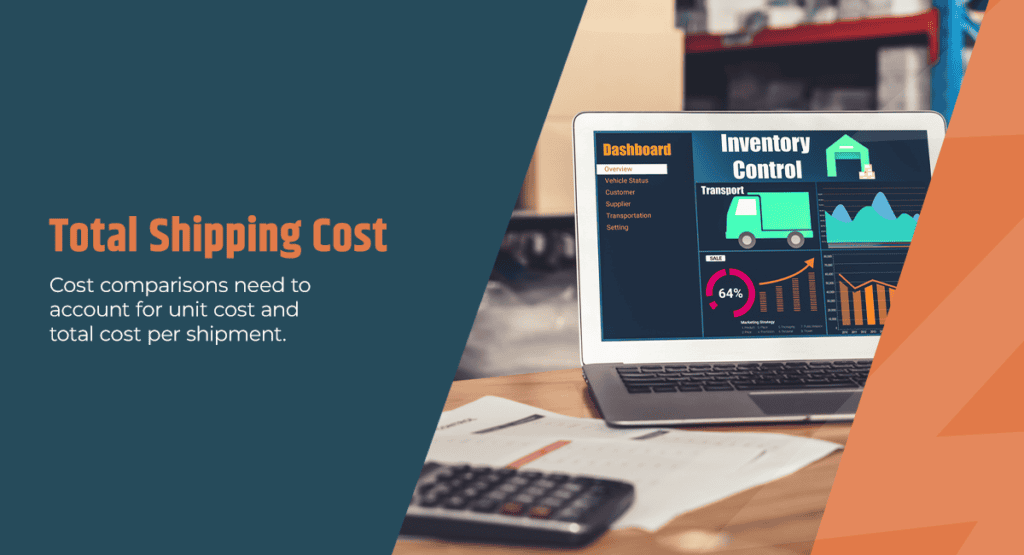
Cost comparisons need to account for unit cost and total cost per shipment. A mailer’s die-cut design and finish typically carry a higher per-unit price, but the format eliminates the need for a separate outer carton on single-pack DTC orders, which can offset that premium. Volume pricing tends to favor the RSC, though void fill and packing materials add both cost and labor on top of the box itself.
Right-sizing packaging to the product’s actual dimensions is the most impactful lever for either format. Oversized boxes generate unnecessary dimensional weight charges, since carriers bill the greater of actual weight and DIM weight. It’s calculated as length × width × height, divided by the carrier’s DIM divisor.
Reviewing current invoices for unusually high DIM charges is a quick way to spot an existing mismatch between box size and product size. A deeper look at dimensional weight and packaging shows how this calculation affects per-shipment pricing regardless of which box a seller chooses. Evaluating total cost per shipment, rather than box price alone, gives a clearer picture of which format actually saves your business money.
Presentation and speed often outweigh raw capacity for a mailer box, and its tapeless, self-locking design speeds up high-volume packing since there’s no separate sealing step to slow down the bench. Several scenarios make that tradeoff worthwhile:
Protection and efficiency typically take priority over presentation in these scenarios, though that doesn’t preclude brand visibility, since custom exterior printing is available on an RSC as well. The following situations call for a shipping box:
A few questions often come up when sellers start comparing these two formats in the context of their own catalog. Here are some answers to help you decide.
You can use a mailer box for fragile, lightweight and compact items. This format can work well when paired with protective inserts or wrapping, though results vary depending on the product’s shape and weight.
Run a shipping trial first to confirm the combination holds up before committing to a full production order. For items that need additional cushioning or internal protection, an RSC with void fill typically offers more reliable coverage.
The mailer box type is better for subscription boxes, since recurring deliveries benefit from a polished, repeatable presentation that customers come to recognize. While mailers are typically ideal for subscription brands shipping a single curated item each cycle, subscriptions bundling several products benefit from an RSC’s extra room. Many subscription companies switch formats seasonally as the contents of a given box change.
RSC shipping boxes can be custom-printed, giving the format a professional look even with less printable surface area than a mailer. The printing method often depends on order volume. Digital printing suits smaller runs or frequent design changes, while flexo printing is better suited to larger production runs. The right choice depends on how often a brand updates its packaging design.
You don’t have to choose just one box type for your e-commerce store. Many sellers use both formats, choosing a mailer box or a shipping box for e-commerce orders based on the specific product and order type. They typically use a mailer for direct-to-consumer orders where unboxing matters most and an RSC for wholesale or bulk fulfillment where efficiency takes priority.
Whether you opt for a mailer box or an RSC shipping box, the next step stays the same. Bolt Boxes supplies both formats, so the recommendation above comes from a single, reliable supplier. Our team engineers the right solution around a product’s dimensions, protection needs and branding goals.
Every order benefits from digital, flexo and litho printing, so a brand’s logos and custom prints carry through on either format. Design, prepress, manufacturing and shipping happen under one roof in Minneapolis for tighter quality control and faster turnaround. More than 60 years in the box-making business, a 99%-plus on-time delivery rate and ISO 9001:2015 certification back that up. Our corrugated boxes are also 100% recyclable, made from 60%–95% post-consumer waste.
Contact our team today to start building the right box for your product.


