

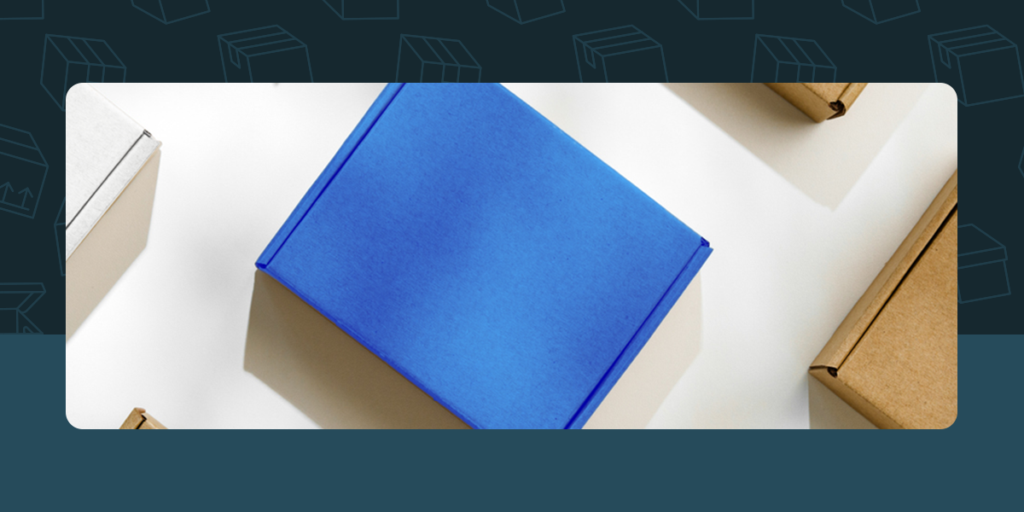
A shipping box shows up before a single product is seen. It’s the first physical signal a customer receives, and its surface color and finish already tell a brand story before anyone opens the flaps. Choosing between unprinted kraft, white corrugated and full-color printed boxes isn’t a small styling decision. Each option speaks to your customers differently.
Considering the earthy simplicity of kraft, the polished neutrality of white, or the vibrant customization of full-color printing depends on how you want your products to be received. Comparing white boxes, kraft boxes, and full-color options against your brand’s design and positioning goals is the first step toward making the right choice.
Use this quick comparison to see how each box option affects your brand presentation, print quality, sustainability messaging and overall packaging budget.
There’s a strong case for leaving corrugated boxes unprinted. Kraft boxes are widely used and valued for their natural look and eco-friendly reputation. For many organizations, an unprinted kraft box represents a no-frills but dependable packaging solution.
Rather than a fallback option, kraft represents a deliberate brand choice built around simplicity and sustainability.
Unprinted kraft corrugated has a natural brown, textured surface that reads as earthy and honest right out of the box. That raw, unfinished look does a lot of communicating on its own, letting a brand hint at simplicity and environmental responsibility without needing bold graphics or lengthy copy to make the point.
Research by Ipsos demonstrates how customer perceptions of packaging vary significantly by material. For some customers, kraft’s natural look may also support an impression of sustainability and authenticity, especially before they read any details on the box.
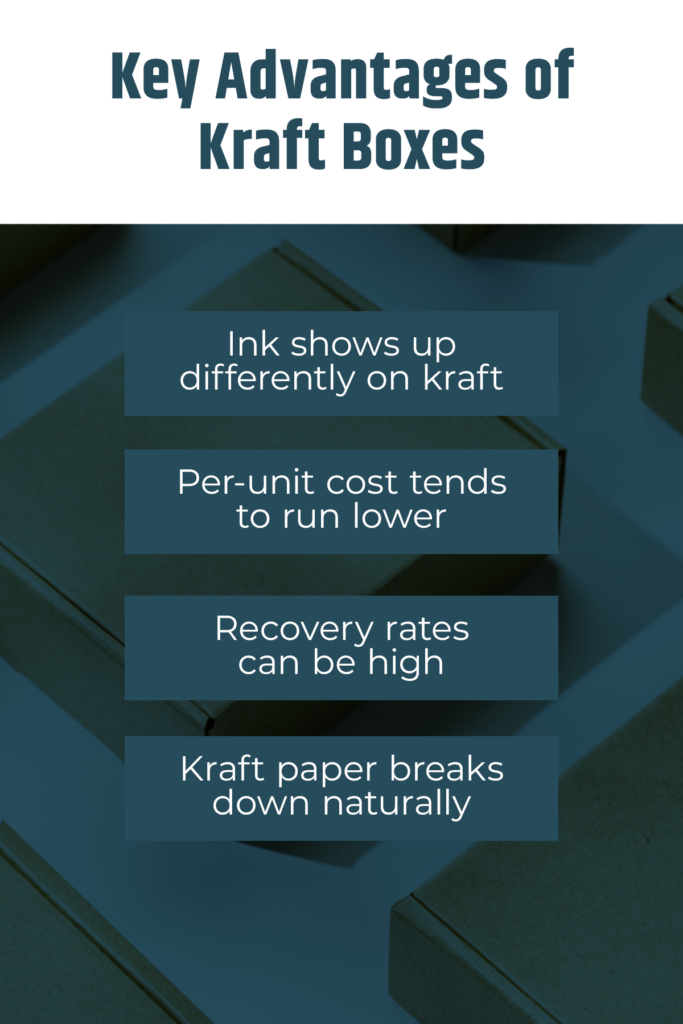
Beyond looks, a few practical details are worth knowing before committing to kraft boxes:
Bolt Boxes provides recyclable kraft boxes made with 60% to 95% post-consumer waste, and corrugated packaging made from 30% to 70% post-consumer waste.
Kraft corrugated tends to make the most sense for brands built around natural, eco-forward or artisanal positioning. The material’s raw look can support that story with very little added design. Designs that lean on dark, simple ink colors also suit kraft well, since bold colors naturally hold their contrast against brown fiber.
High-volume shippers often gravitate toward choosing kraft boxes. The per-unit cost of these types of boxes tends to matter more as order sizes grow, and operations teams that prioritize streamlined procurement appreciate having a single dependable option rather than juggling multiple finishes.
For brands still working through their design approach, custom kraft boxes pair well with a closer look at product packaging design before finalizing a decision. If your priority is high-volume procurement with a straightforward per-unit cost, or sustainability, kraft checks those boxes (no pun intended) too.
White corrugated boxes and brown box packaging may not be as different as you think. Both share the same fluted, layered structure, with one key difference showing up only at the surface. A bleached or coated white liner replaces the natural brown fiber on the exterior linerboard, creating a smooth, neutral canvas without changing the underlying architecture that gives corrugated its strength.
Many brands compare kraft, white and full-color options when they want their packaging to stand out and stick in customers’ memories. Where kraft leans natural and textured, white corrugated offers a clean, modern and precise aesthetic that reads as more deliberate. Because brown boxes are commonplace, a white box tends to stand out visually the moment it arrives.
That surface can also help a brand appear premium, quality-focused and meticulous without competing with kraft’s own strengths in authenticity and warmth. The main advantage of white corrugated shipping boxes is contrast. Logos, typography and color blocks appear with greater clarity against a bright, neutral surface. This difference gives your design elements more room to stand out.
White corrugated boxes come with three standout considerations to keep in mind up front:
Bolt Boxes provides white corrugated shipping boxes that are recyclable. Our boxes are SFI® Certified and made from ethically sourced trees, so sustainability and shelf appeal don’t have to compete.
White corrugated tends to suit organizations that want to combine sustainable practices with a clear, distinctive visual brand. Research shows that 90% of consumers feel more positively about a brand when its packaging is recyclable. Pairing that sustainability angle with eye-catching design gives businesses a way to stand out from competitors on both a visual and emotional level.
A few scenarios where white boxes tend to be the right fit include:
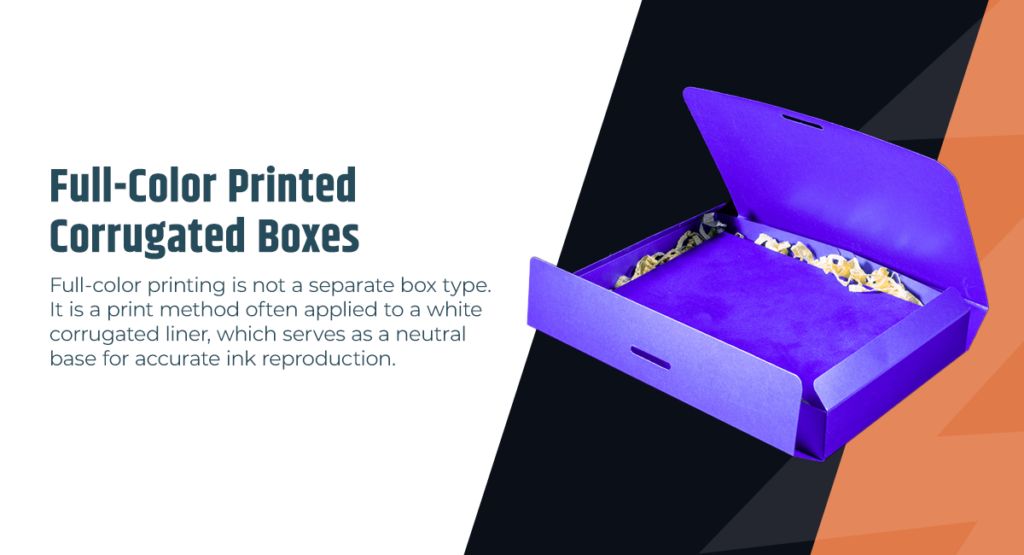
Full-color printing is not a separate box type. It is a print method often applied to a white corrugated liner, which serves as a neutral base for accurate ink reproduction. That distinction is one of the most common points of confusion for decision-makers comparing kraft vs. white shipping boxes, since full-color printing actually builds on top of the white option rather than replacing it.
Full-color printing refers to CMYK (four-color process) printing rather than the spot-color or single-color approach used in traditional flexography. When it comes to comparing a kraft vs. white shipping box for a design-heavy project, that distinction matters because it changes what’s actually possible on the surface, from photography to gradients to fine detail work.
Three print methods commonly used for full-color corrugated packaging are digital, flexo and litho. Each method is suited to different levels of design complexity, order quantities, and quality requirements. Some corrugated manufacturers, like Bolt Boxes, offer all three processes in-house. This benefit lets buyers match the right method to a specific project without switching vendors partway through. Reviewing available print capabilities up front makes it easier to choose the right option before a project moves into production.
These common corrugated print methods can help organizations to clarify which option is the right call:
Print method selection ultimately affects cost, so it’s worth thinking about order volume and design complexity together before choosing one.
Full-color printing tends to work best in many of the same situations as white boxes, but the two decisions aren’t identical. White is fundamentally a surface decision, while full-color is a design decision that layers on top of it. A brand choosing white boxes is making a call about material, while a brand choosing full-color printing is making a call about both creative direction and production volume.
Full color makes the most sense for brands where the box itself serves as a marketing vehicle. Examples include maintaining a retail shelf presence, social-worthy unboxing moments, campaign-specific runs or designs that require CMYK accuracy to land correctly.
For organizations unsure about their printing, exploring the available printing options may be a useful next step before finalizing a decision.

Choosing between a kraft box and a white box extends beyond logistics. Each box that leaves your facility is a strategic investment in your brand’s identity and potential success. Your packaging carries your message, protects your product and contributes to the overall customer experience. In today’s competitive market, packaging reinforces your business values and creates lasting impressions.
Strong knowledge of the nuances of every corrugated material choice can create opportunities for your business. It helps you to closely align these choices with your unique brand vision, budget and operational needs. Yes, your packaging should be practical, but that doesn’t mean it can’t be compelling and eye-catching.
This is where the right partnership becomes crucial. Having a team that understands your design aspirations in your corner helps ensure that the passion and care you have for your brand are put directly into your product packaging. In doing so, you turn a standard business necessity into a strategic way of elevating your brand.
Here are some frequently asked questions to help clarify your packaging decisions:
It creates a memorable first impression. Aligning your box’s appearance with your brand identity reinforces messaging, enhances customer perception and makes your products stand out distinctly in the market.
Unprinted kraft boxes can be a strong, eco-friendly choice. These boxes are often biodegradable and made from post-consumer waste. White corrugated options are also recyclable and can be SFI® Certified. Many full-color printed boxes can remain recyclable, balancing visual impact with environmental goals.
Many white corrugated boxes are recyclable. Eco-friendly inks and processes can be used to achieve vibrant designs while supporting environmental commitments.
Once you know whether kraft, white or full-color printing fits your brand, the next step is building it. Bolt Boxes offers digital, flexo and litho printing in-house, so your design and brand goals drive the print method, not a manufacturer’s limitations.
We know production schedules depend on reliable turnaround. Keeping printing, prepress, and manufacturing under one roof helps us keep your timeline on track from the first proof to the final shipment. Explore our print capabilities to see which process fits your order size and design complexity.
That range is backed by a G7 Master Certification for color accuracy and nearly 60 years of corrugated experience as part of Great Northern, so your boxes are built with precision from proof to final production. Every job also runs through our ISO 9001:2015 quality system, so the box that ships matches the one you approved.
Are you ready to put your material choice into action to elevate your brand? Use our box builder to start designing your custom box, or contact our team for guidance on materials or print methods that meet your goals.


