

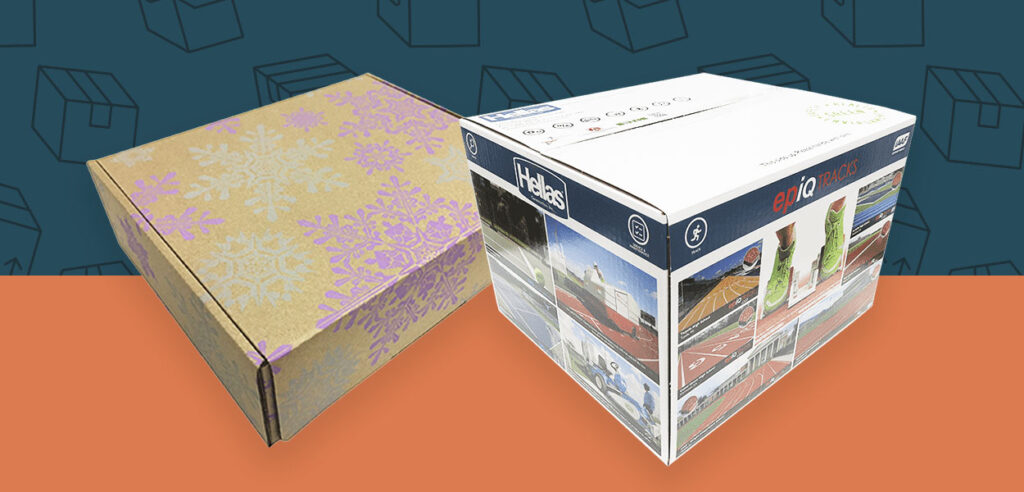
Kraft vs. White Packaging Boxes

Build Custom Corrugated Boxes With Bolt Boxes

When your business ships a product to a customer, the packaging is the first thing they see. Many companies and organizations, such as Amazon and Apple, use their packaging to enhance branding. For example, the Amazon “smile” logo is immediately recognizable to customers. Apple, on the other hand, uses sleek white packaging to stand out.

The color of the boxes you choose can help customers identify your brand and even enhance their perception of your products. However, making the choice between classic kraft boxes and white boxes can be difficult, as both have unique benefits that make them appealing.

That’s where we come in. Our packaging guide will walk you through the basics of kraft corrugated boxes vs. white corrugated boxes so you can invest in the one that aligns with your business’s style.

The Pros and Cons of Kraft Packaging Boxes

Packaging with kraft boxes has been an industry standard for decades. They’re tough, versatile and reliable for both consumers and businesses. Other pros include:

  • Their aesthetic: Kraft packaging is simple and earthy in appearance. The brown paper pulp projects grit and toughness while promoting sustainability. The even shape and plain exterior also embody a utilitarian commitment to practicality and getting the job done. Simply put, these boxes communicate that you are focused on getting your customers what they need as efficiently as possible. Many customers admire and resonate with that straightforward approach.
  •  Their sustainability: Kraft packaging is more eco-friendly than most white packaging since it does not need to be bleached to achieve its colors. Plus, these packages can be recycled and repurposed for other uses.
  • Their price: Kraft packaging tends to be cheaper to produce than white packaging, as it does not require bleaching and is not compatible with the same level of printing and branding. Purchasing kraft packaging boxes in bulk can reduce costs even further. As a result, it is often the go-to choice for small to medium businesses or those looking to minimize expenses.

These boxes are not without their limitations, however. Consider some potential downsides of kraft packaging:

  • Design limitations: Kraft packaging is not compatible with many of the designs that white corrugated boxes are due to the brown color, which distorts the appearance of printed colors. Black can be used reliably, but brighter colors, such as red, yellow and green, will not appear how you want. 
  • Don’t stand out to consumers: Due to the prominence of kraft packaging boxes, some consumers and businesses may find them bland or cheap-looking. That may be a problem if you’re selling a higher-end product for a prestigious clientele. However, if your brand is emphasizing environmental protection, kraft packaging is typically the better option due to its more sustainable production process.
  • Susceptibility to water damage: Another weakness of kraft packaging is its susceptibility to water. Because it is composed of paper pulp, the box can saturate quickly, degrading the box and potentially exposing the product inside to water damage. In most climates and under most circumstances, this weakness to water isn’t an issue. However, in parts of the world that regularly experience monsoons or flooding, it may be best to invest in a more water-resistant packaging material.

The Pros and Cons of White Packaging Boxes

Using white cardboard boxes for packaging is a less common practice, and that is part of the appeal. Most people expect to receive a brown box on their doorstep when they order something. When a white one shows up instead, the experience becomes more distinctive and memorable, especially if the box leverages the branding options afforded by the white color. Other upsides of white packaging boxes include:
The Pros and Cons of White Packaging Boxes
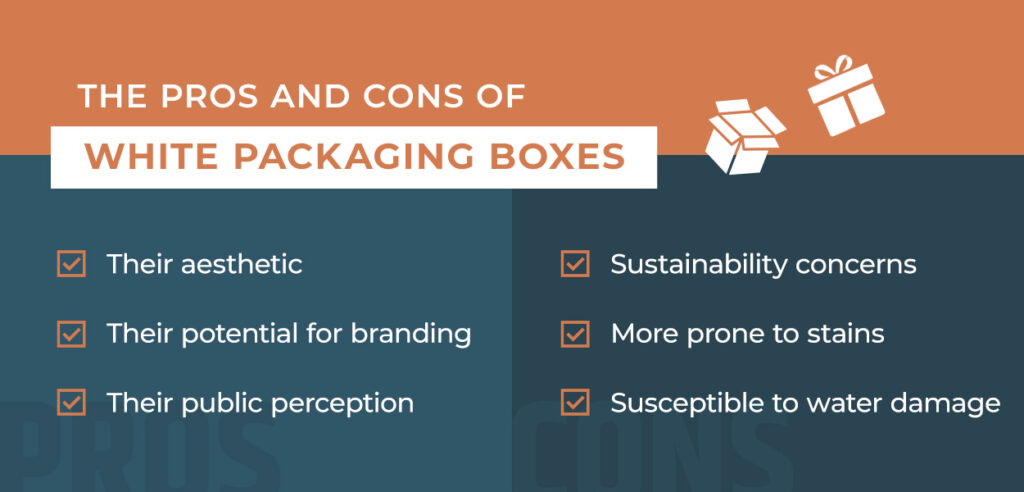
  • Their aesthetic: White packaging is clean and sophisticated in appearance. While it’s made of the same paper pulp as traditional kraft boxes, these boxes trade the classical, rustic look for a more chic, modern aesthetic. This lends them a sense of class and importance that may not be reflected in kraft packaging. Their uncommon appearance also lets them stand out from a sea of brown boxes, drawing the eye of consumers toward your unique branding and products.
  • Their potential for branding: Perhaps the greatest strength of white packaging is that colors, designs and pictures can be printed on it without distorting. This allows companies to include detailed logos, product images and more on the outside of the box. As a result, the bleached paper pulp essentially becomes a portable billboard for your brand. It can build a connection between you and the customer, and it may also catch the eye of other consumers and help you build a distinctive brand identity that consumers recognize.
  • Their public perception: Many consumers associate white packaging boxes with higher-class items. That prestige works both ways — premium items are made more luxurious by white packages, and white packages are made more prestigious by the premium items they often contain. Using white boxes can enhance your business’s messaging and appeal to its audience.

There are some downsides to using white packaging: 

  • Sustainability concerns: The most important is that white packaging is less sustainable than traditional kraft packaging due to the bleaching process that gives it that distinctive white color. Using recycled fibers and bleach alternatives can minimize this environmental impact.
  • More prone to stains: Another limitation is that the white exterior is more prone to stains and marks in ways that kraft boxes are not. The white surface will highlight these imperfections, which can make the box appear grimy and disposable rather than clean and modern. Careful packaging and handling can mitigate this issue, but it may be too much to ignore for some businesses.
  • Susceptible to water damage: Like kraft boxes, white boxes are made of paper pulp and are susceptible to water damage. A white box may even look worse than a kraft box if it sustains water damage. This issue, too, can be mitigated by careful handling.

Build Custom Corrugated Boxes With Bolt Boxes

Build Custom Corrugated Boxes With Bolt Boxes

Whether you use white boxes or kraft ones, you need a beautiful, functional design that communicates who you are to your customers and the market at large. With Bolt Boxes, you can do just that. Our turnaround times are the fastest in the industry because we’ve been designing, manufacturing and shipping boxes for over 60 years. Our in-house structural designers will work closely with you to ensure your boxes are shaped for your products, and our G7 Master Qualification ensures our prints are of the highest quality.

To learn more about partnering with us, fill out our contact form or give us a call!

