
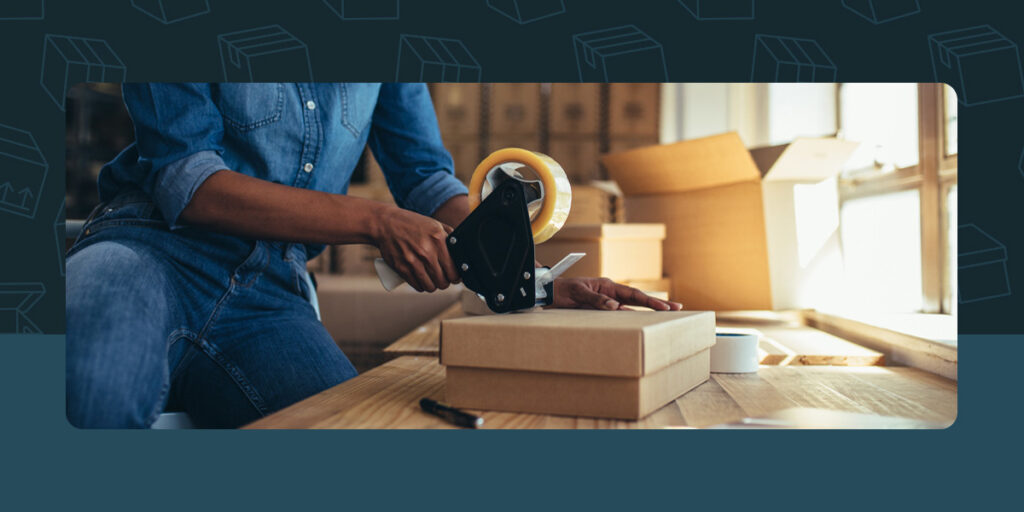
A structured packaging process helps you fulfill orders faster and improve customer satisfaction as your business grows. This guide provides practical packaging efficiency tips to help you build a snag-free system. You will learn how to select materials, design ergonomic workstations, optimize your workflows and train your team for consistency.
Delivery performance matters — 93% of U.S. consumers say it influences their opinion of a brand. An efficient packaging process enables you to fulfill more orders in less time, improving customer satisfaction and driving repeat purchases.
Organized workstations and targeted picking strategies reduce bottlenecks and keep your workflow moving smoothly even during high-volume periods. Optimizing your processes will enable easy scaling during peak seasons.
Packaging quality is also influential. Proper materials and time-saving techniques reduce the risk of damage during transit and returns, which typically cost 30% of an item’s original price to process.
Over time, these improvements strengthen your reputation. Customers who notice consistent, fast fulfillment will come to trust your reliability. Satisfied shoppers will leave positive reviews, attracting new business and creating a cycle of growth.
Limiting your inventory to a core set of boxes and fillers speeds selection and reduces errors. Standardization also simplifies stock management and allows you to save costs through bulk purchases.
Here is how to build a streamlined packaging system.
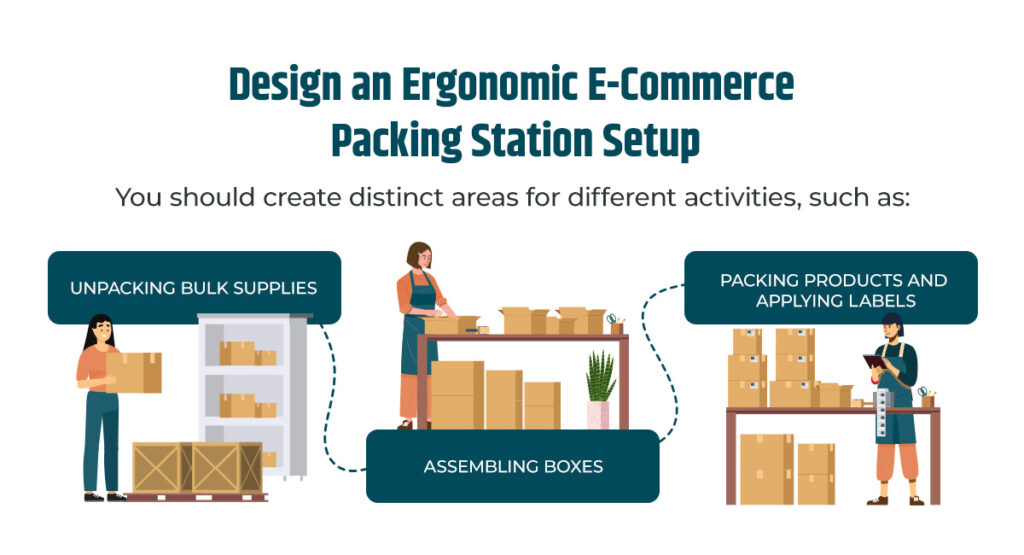
A well-designed workspace supports a natural progression from picking to packing to labeling to dispatch. U-shaped or linear flows work well because they allow packers to move through tasks sequentially. You should create distinct areas for different activities, such as unpacking bulk supplies, assembling boxes, packing products and applying labels.
Within each workstation, arrange materials according to the primary work zone principle, which means placing the most-used items within easy arm’s reach to minimize bending, reaching and twisting, simultaneously saving time on every order.
Once you have your materials and workspace prepared and organized, shift your attention to improving procedural details.
Picking orders affects how quickly you can pack them. Consider these three approaches for an efficient packaging process.
If storage space allows, having standard box sizes already folded and ready to pack is a best practice for growing operations.
Prepackage frequently purchased sets as complete kits. For example, you can put flat and fitted sheets, pillowcases and a bedspread into one bundle. When an order comes in, the packer can grab one kit instead of three separate items.
The fastest packing stations run on routine. Build a standard sequence that every team member follows for each order. For example:
A consistent sequence means your team makes fewer mistakes and packs orders faster. Your team members build muscle memory and can move through orders without thinking about what comes next. Training new hires will also take less time when you provide a specific progression for them to follow.
Your packaging operation is only as efficient as the people running it. Train staff on multiple responsibilities, including picking, packing and labeling. Cross-training increases flexibility and prevents bottlenecks when one person is unavailable.
Encourage your packers to provide feedback on process improvements or inefficiencies they notice. They are often the first to identify problems like poorly placed supplies, confusing box selection or redundant steps. Acting on their input improves morale and workflows.
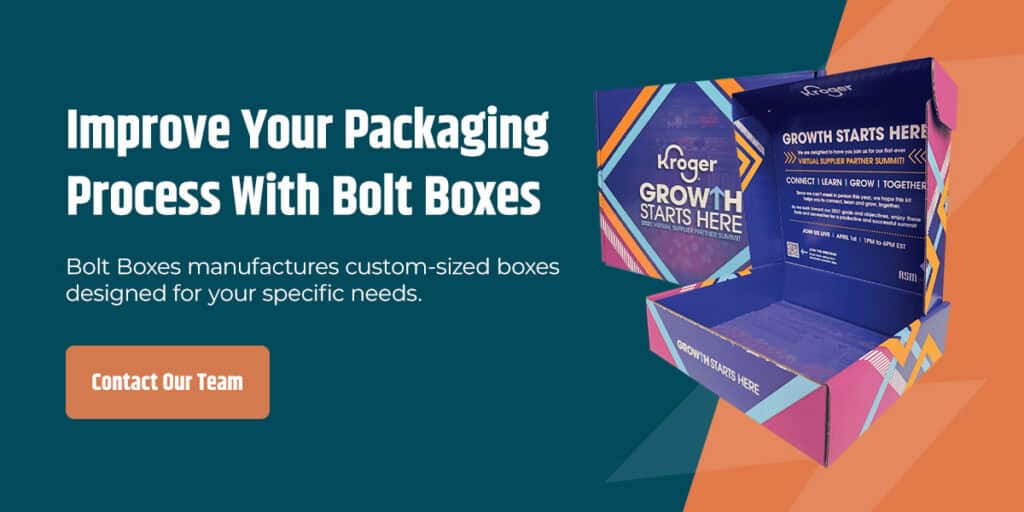
Bolt Boxes manufactures custom-sized boxes designed for your specific needs. We handle design, printing and production in-house, which gives us tighter quality control and faster turnaround than companies that outsource parts of the process.
Preprinted boxes eliminate the manual step of applying labels or stickers to every package. Our boxes are recyclable, and we have maintained ISO 9001:2015 certification for quality. Use our online Box Builder to configure your order with no minimum quantity required, or call us at 855-677-1381 to discuss your packaging needs.