

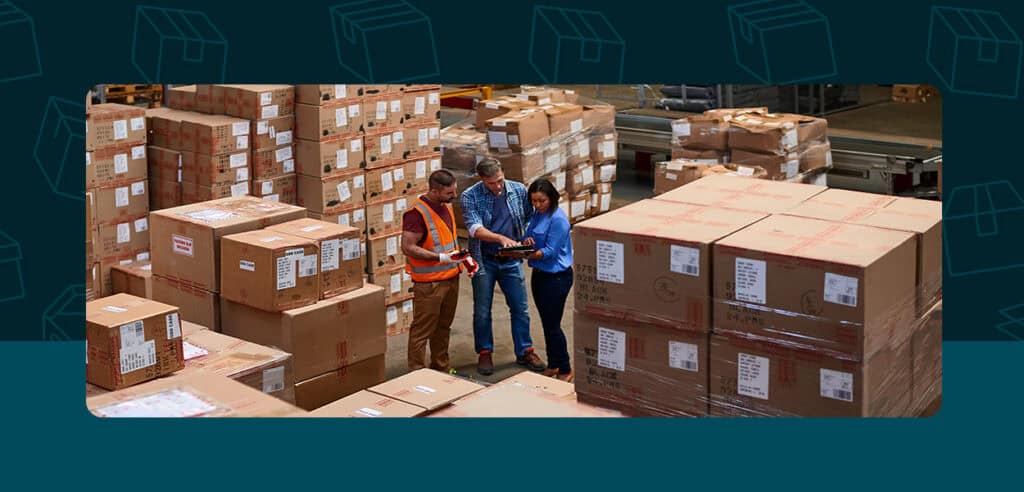
Shipping heavy, dense or high-value products in traditional packaging is often a gamble. A standard 200-pound test box might hold a product while it sits on a desk, but it can fail when stacked five high on a pallet in a humid warehouse. Choosing heavy-duty shipping boxes requires balancing structural integrity, material weight and cost. It’s a decision that changes packaging from a simple expense into a strategic asset that protects your product and profitability.
Luckily, you can prevent costly damage by matching board grades to your specific load requirements. Discover how to maximize logistics efficiency and meet your sustainability goals through better stacking strength and pallet stability.
Carefully engineered linerboard and fluting materials deliver superior performance. The packaging industry uses precise, measurable standards to define heavy-duty boxes.
Two testing methods result in grades for industrial shipping boxes.
You will often see boxes rated with codes like 32 ECT or 200# burst, which reflect the results of these two testing methods.
Understanding these tests will help you get the correct protection level for your inventory. For heavy-duty applications, you need high ratings in both categories. Heavy-duty box criteria typically start at a 275# burst strength or a 44 ECT rating and increase from there.
Reinforced corrugated boxes achieve their strength through a combination of liners and flutes.
Liners are the flat sheets of paper that form the inner and outer face of the board. Heavy-duty boxes use heavier, thicker paper stocks for these layers.
Fluting is the wavy, arched paper glued between the liners. The arch is one of the strongest structural shapes in nature and engineering. Arches channel gravitational forces laterally into solid supports or buttresses. Manufacturers can engineer boxes for crush resistance or cushioning by adjusting the size and frequency of these arches.
Standard flute configurations vary in thickness to meet different packaging needs:
The ASTM D5118 international standard sets strict requirements for fiberboard shipping boxes. When you order a 350‑pound test box, you can count on it to deliver the strength you paid for.
Wall structure is another influential factor when choosing heavy-duty shipping boxes.
Standard single-walled boxes are a typical choice for light, non-fragile items like clothing, cosmetics and plastic products. The B flute handles puncture risks well, while the E flute is ideal for small parcels.
Single-walled boxes with C-flute construction provide extra strength and resistance when your products need more cushioning or you plan to stack them higher on pallets. Master cartons carrying multiple retail items also benefit from this upgrade.
A double-walled box has five layers — three flat liners and two layers of fluting. Those dual layers create a rigid barrier that acts like a shock absorber. The inner wall often remains intact even if the outer layer becomes pierced or crushed during transit.
Double-walled boxes are the industrial shipping standard. They are best for:
Packaging is a functional part of your logistics chain. Using the correct heavy-duty shipping boxes improves the efficiency of your warehouse and freight operations.
You pay for warehouse space by the square foot, but you use it by the cubic foot. Stacking products vertically is the best way to maximize value.
Standard boxes suffer from a phenomenon called box fatigue over time. Humidity and constant pressure cause the fibers to relax, leading to leaning stacks or collapsed bottom rows. In contrast, heavy-duty boxes with high ECT ratings maintain their shape for months or years. You can confidently stack pallets higher to increase your storage density without investing in new racking systems.
Freight shipping relies on pallet integrity. However, pallets become unstable under the weight of bulging or crushed boxes.
Heavy-duty reinforced corrugated boxes resist the tension of strapping bands and stretch wrap. They maintain strict 90-degree corners, which allows for tighter packing patterns. A tight, uniform pallet is less likely to shift during transit, reducing the risk of rejected freight or damage claims from less-than-truckload carriers.
In LTL shipping, your pallet may move through distribution hubs, sit on cross-docks and ride on conveyors multiple times between your facility and the customer’s location. Each touchpoint is a risk.
Heavy-duty cardboard boxes are an insurance policy against supply chain variability. They buffer against forklifts, automated sorting arms and road vibrations.
Not every product needs a double-walled box. However, switching to higher-quality packaging is almost always more affordable than replacing a damaged product. Consider upgrading to heavy-duty materials in the following scenarios.
Weight distribution is another factor. To illustrate this concept, picture a 50‑pound bag of feathers and a 50-pound metal gear. The feathers spread their load evenly, while the gear concentrates force into a single pressure point on the box floor. Dense items can punch through single‑walled corrugated during a drop, but reinforced double‑walled boxes disperse that impact energy across a wider area to keep the product from breaking through.
If you ship a $2,000 medical device, it’s worth the investment to pay 50 cents more for a heavy-duty, double-walled box that is far more likely to get the product to its destination in one piece.
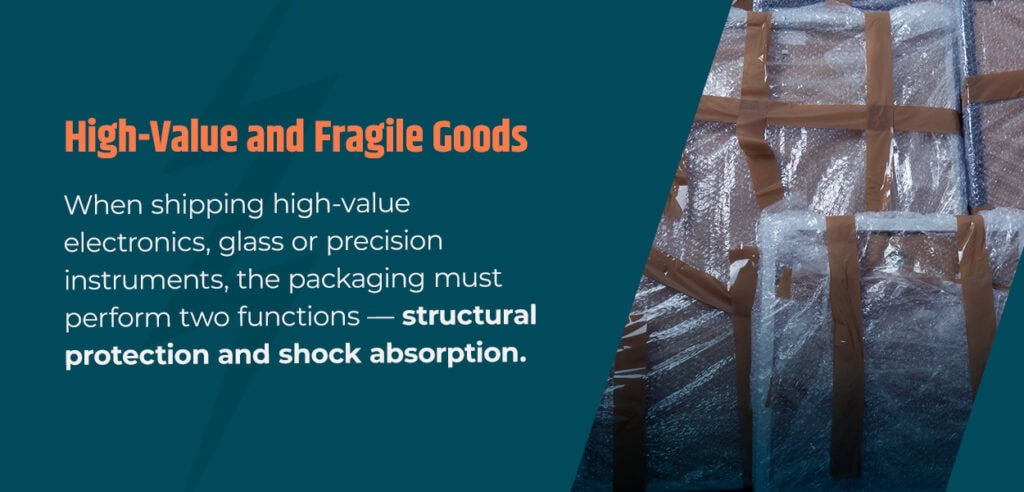
When shipping high-value electronics, glass or precision instruments, the packaging must perform two functions — structural protection and shock absorption. The multiple layers in heavy-duty cardboard boxes dampen vibration. When combined with custom inserts, they immobilize the product to prevent internal collision damage.
International shipments face extended transit times and uncontrolled environmental conditions. A container shipped across the ocean may experience high humidity, which weakens paper fibers. Heavy-duty liners typically contain more starch and fiber, making them naturally more moisture-resistant than lightweight retail boxes. If your product is crossing borders or sitting in customs, heavy-duty packaging keeps it looking as it did when it left your dock.
What qualities make heavy-duty corrugated packaging one of the most responsible choices for B2B logistics?
Unlike expanded polystyrene or mixed-material packaging, corrugated board is a monomaterial. It is the most recycled packaging material in the United States, with an estimated recycling rate between 69% and 74%. Using corrugated board creates a circular economy where your old shipping boxes become the raw material for new ones.
Heavy-duty corrugated boxes are a practical replacement for wood crates or plastic bins. Wood crates are challenging to dispose of and add to fuel costs with their extra weight. Meanwhile, plastic bins require a return logistics loop to be sustainable.
Reinforced corrugated boxes are durable enough to handle industrial loads, but you can still bale and recycle them after they reach their destination. Switch to heavy-duty corrugated to reduce your customers’ landfill waste and help them meet their environmental, social and governance goals.
While stock heavy-duty cardboard boxes offer convenient, ready-to-ship options, many businesses maximize value through custom sizing. Instead of settling for oversized stock boxes that require additional void fill materials like peanuts or paper, you can order custom-sized, heavy-duty boxes that provide a perfect fit for your products.
The right-size principle in packaging states that the best protection is a tight fit. If you leave enough space for a heavy product to move inside the box, it will gain momentum and slam into the box wall when the delivery truck brakes.
Custom heavy-duty boxes manufactured to your products’ exact dimensions eliminate the air inside the package. Since the product cannot generate momentum, it will move as a single unit with its box.
Custom sizing also reduces dimensional weight shipping charges, since carriers charge based on box sizes. Eliminating two inches of empty space from every box can save thousands of dollars in annual freight costs.
Beyond cost savings, right-sized packaging reduces waste by eliminating excess cardboard materials and void fill requirements. This approach supports sustainability goals while maintaining the protective strength your products need.
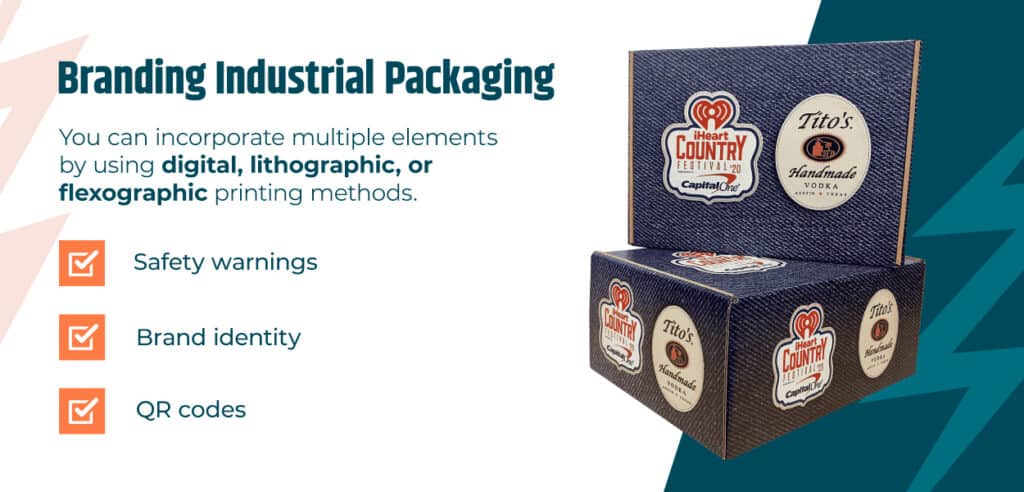
Industrial shipping boxes do not have to be plain brown. Various printing techniques add branding, logos and critical handling instructions directly onto heavy-duty corrugated board.
You can incorporate multiple elements by using digital, lithographic or flexographic printing methods.
Printing branding and information onto functional packaging turns it into a marketing asset while maintaining the protective qualities essential for industrial applications. Custom printing means your brand message travels with your product from the warehouse to its final destination.
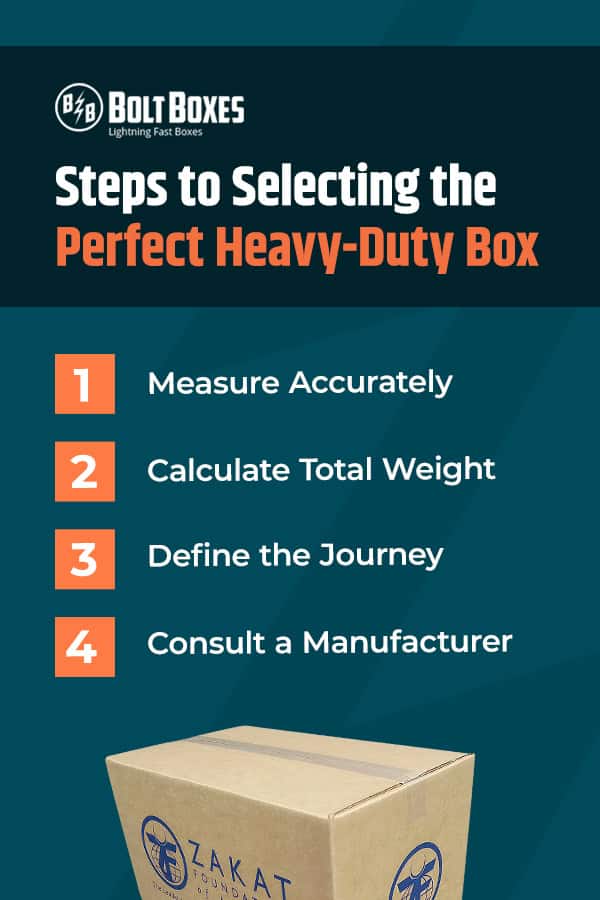
Choosing packaging is a systematic process. Follow these four crucial steps to help you engineer the right solution for your products.
You’ll need to provide the inside dimensions when ordering a custom box. To determine these numbers, always measure the product, then add space for protective foam or bubble wrap.
The manufacturer will calculate the outside dimensions based on the board’s thickness. Remember, double-walled boxes are significantly thicker than single-walled boxes, so their outside dimensions will be larger.
Estimate the combined weight of your product and its protective materials. Factors like fragility, density and the shipping environment all help determine the ideal packaging. Ask a packaging specialist for advice if you are unsure which box grade or style is best for your application.
Consider all the touchpoints that the box’s shipping and storage life cycle will expose it to.
Experienced manufacturing partners welcome the opportunity to turn packaging challenges into strategic advantages. They bring decades of engineering expertise to the technical aspects of ensuring every shipment arrives safely at its destination.
When sourcing reinforced corrugated boxes, look for a manufacturer that offers comprehensive in-house capabilities, from initial box selection through final production. The ideal partner provides structural prototyping services, allowing you to physically test boxes with your actual products before committing to production runs. This hands-on approach eliminates guesswork and builds confidence in your packaging decisions.
Beyond structural engineering, team up with a manufacturer that offers complete customization options — precise sizing, advanced printing capabilities and specialized features that meet your industry needs.
When design, prototyping, printing and production happen under one roof, you gain faster turnaround times, better quality control and seamless project coordination. In that way, a manufacturer can become an extension of your team. Their real-world experience and technical expertise can transform your packaging into a competitive advantage that protects your products and boosts your brand equity.
Protect your product and profits. Investing in high-quality heavy-duty shipping boxes is a sophisticated way to reduce the hard costs of damage and returns while improving logistics efficiency.
Whether you need the robust protection of a double-walled container or the optimized strength of a reinforced single-walled box, the goal is the same — to ensure your product arrives in the same condition it left your facility.
Bolt Boxes combines industrial-strength materials with the speed of digital manufacturing. Our in-house design, printing and production capabilities allow us to produce custom, heavy-duty boxes with industry-leading turnaround times.
Contact our team to speak with a box expert about your load requirements, or use our easy online configurator to start designing your custom shipping box now.


